Velocidad de obturación
Más corto con aurora rápida y brillante; más largo cuando es débil y quieta.

Fotografía
Las fotos están incluidas, pero si quieres probar con tu propia cámara, te ayudamos con gusto.
Conclusiones de campo
Más corto con aurora rápida y brillante; más largo cuando es débil y quieta.
La apertura decide cuánta luz llega al sensor. Un f/1.4 capta cuatro veces más luz que un f/2.8.
Imprescindible: incluso cinco segundos a pulso salen movidos.
Ajustes
Puntos de partida: una aurora fuerte y rápida puede necesitar solo 3 segundos a ISO 800.
Más corto con aurora rápida y brillante; más largo cuando es débil y quieta.
Empieza en 1600 y súbelo si la imagen queda demasiado oscura.
Lo más abierto que permita el objetivo: es el factor principal.
Desactiva el autofocus y fija el enfoque en infinito.
Imprescindible: incluso cinco segundos a pulso salen movidos.
Los modos Auto y semi-auto fallan casi a oscuras.
Cuerpo de cámara
No hay una combinación única. Conocer tu equipo vale más que llevar material caro sin práctica.
Los cuerpos Sony A7, Nikon Z, Canon R y Fujifilm X-T funcionan; en noches débiles importa el ISO limpio.
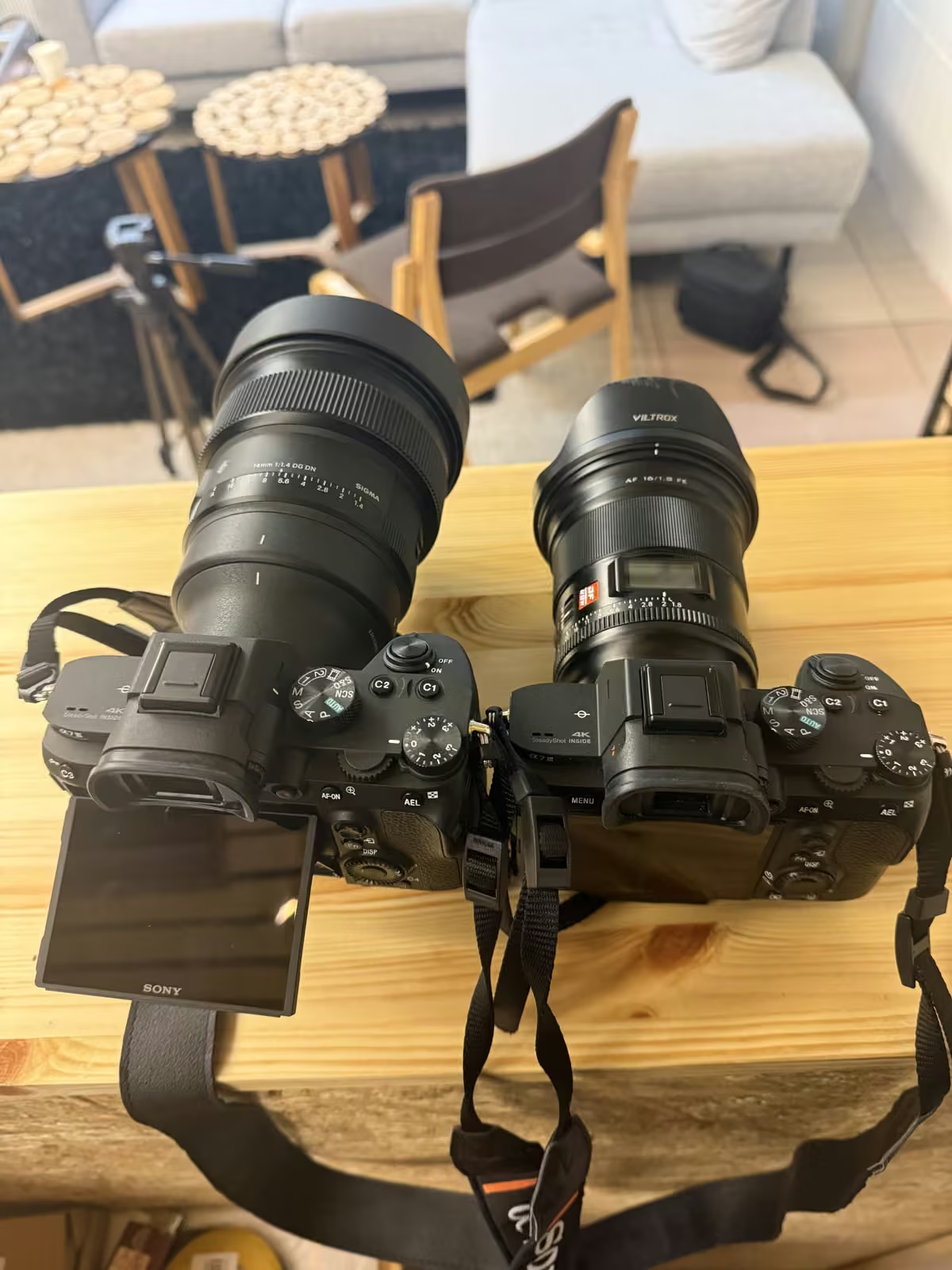
Objetivos
La apertura decide cuánta luz llega al sensor. Un f/1.4 capta cuatro veces más luz que un f/2.8.
El punto ideal es 14-24 mm equivalente full-frame; unos 35 mm es la distancia práctica máxima.
Fijos luminosos, máxima luz y resultados nítidos.
Zooms y fijos de calidad funcionan; sube un poco el ISO.
Objetivo de kit: bien en noches fuertes, arriesgado en débiles.
Muy poca luz sin un ISO extremo y ruidoso.
Técnica
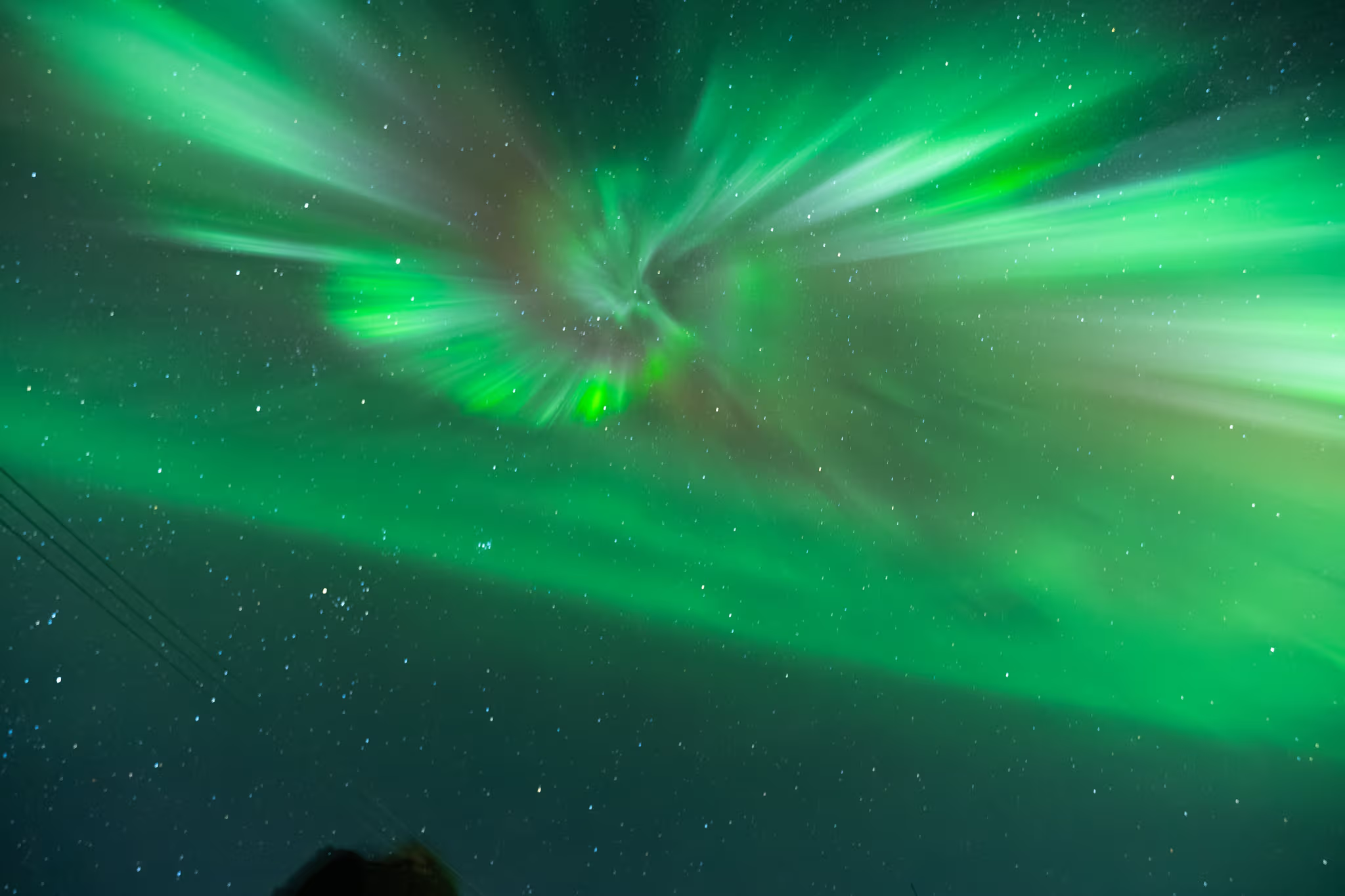
Aurora fuerte y rápida: exposición corta. Aurora débil y quieta: más larga.
Desactiva el autofocus, enfoca una estrella o luz lejana y revisa la previsualización.
El temporizador o mando deja que la vibración desaparezca antes de exponer.
El brillo de la pantalla engaña con frío; usa el histograma.
3200-4000K mantiene el cielo natural; dispara en RAW.
El frío la agota rápido: guarda una de repuesto caliente en un bolsillo interior.
Baja a 2-5 segundos y sube ISO para congelar las formas.
Cámaras de móvil
Sí, con una aurora fuerte. Usa Noche o Astro, evita teleobjetivo y ultra gran angular, estabiliza el móvil y toca el cielo.
Hace automáticamente una exposición de varios segundos.
Apóyalo en nieve, trípode, mochila o techo del coche.
Usa 5-10 segundos, ISO 800-1600 y enfoque infinito.
El autofocus puede fijarse en la nieve del primer plano: toca el cielo.
FAQ
Manual: 5-15 segundos, ISO 1600-3200, apertura amplia y enfoque manual al infinito.
Sí. Los iPhone, Samsung y Pixel recientes captan auroras en modo Noche o Astro; mantenlo inmóvil varios segundos.
Sí. Las exposiciones duran varios segundos; uno pequeño de viaje basta.
Un gran angular fijo y luminoso, idealmente 14-24 mm a f/1.4-f/1.8.
No. Las fotos profesionales están incluidas en cada caza; tu guía puede ayudarte con tu equipo.
RAW siempre que sea posible: conserva más datos para balance de blancos, luces y ruido.
En cada caza las hacemos nosotros y te las enviamos después.
Únete a un tour de auroras boreales en Rovaniemi